

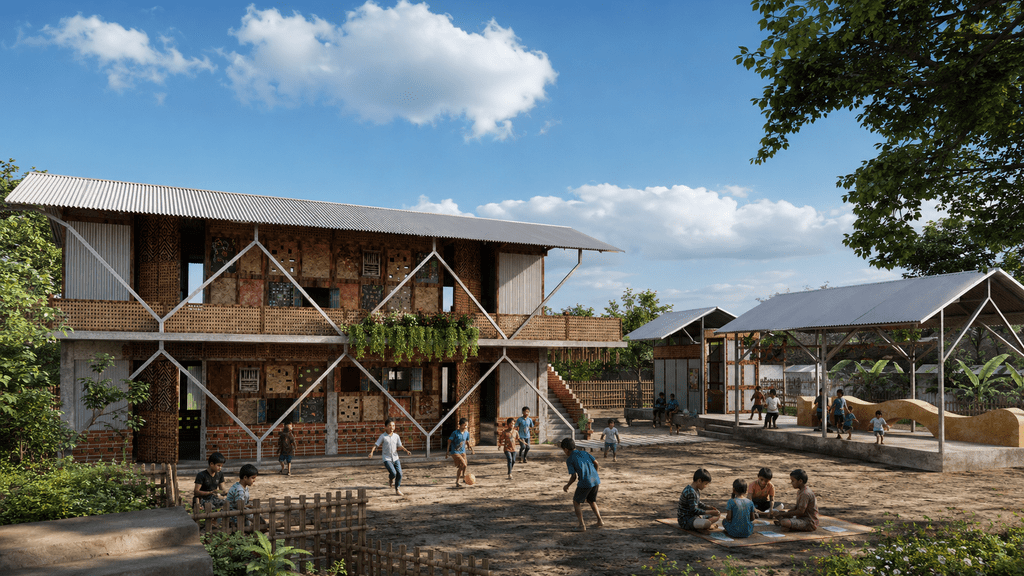
On Char Shonpocha, the rhythm of everyday life follows the Jamuna River. Home to around 10,000 people, this remote riverine island in Bogura is a place where families depend on agriculture, fishing, livestock rearing, and day labour, while the changing seasons shape the way people live and work. For the children growing up here, however, access to consistent and quality education has long remained a challenge. Although a government primary school served the community, irregular and inconsistent learning left many families uncertain about the quality of education their children were receiving. In a community already facing geographical and socioeconomic challenges, limited access to reliable education made it harder for children to build the strong foundation they needed for their future. Understanding the early education needs, Amal Foundation established Ucchash School in 2017, starting with a simple but impactful commitment to give children a joyful and quality beginning. Ucchash provided two years of free pre-primary education to children aged six to eight, along with books, uniforms, stationery, meals, health checkups, and activities that encouraged creativity, teamwork, and confidence. Over the years, children began carrying that foundation into their next stage of education. Ayesha Siddique, a student of Ucchash’s 2022–2023 session, moved on to Shonpocha Ideal School and has consistently ranked first in her class, while her classmate Sumaiya Mim continued her studies with the discipline and confidence she developed at Ucchash.
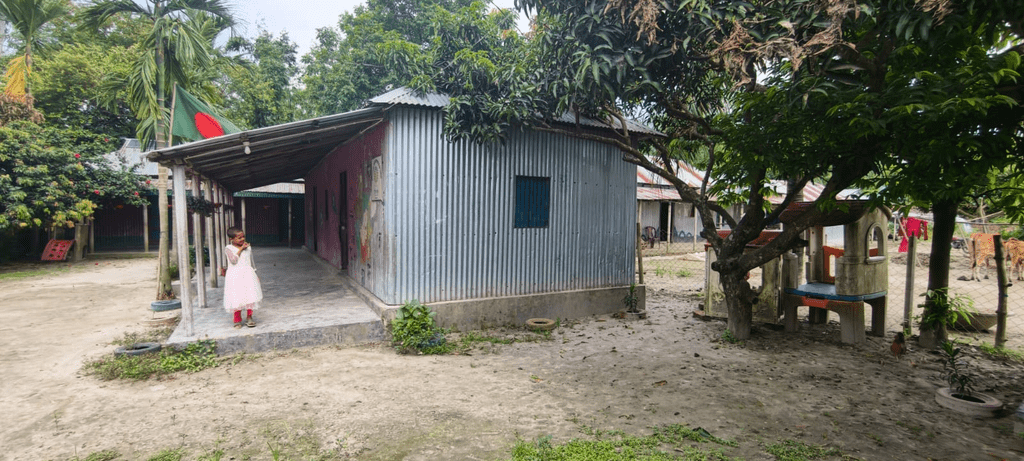
The progress of these children showed how much more the community needed. As demand for Ucchash grew beyond its capacity of 50 students each year, families sought not only a start but opportunities for their children to continue learning. Ucchash operated from three tin-shed structures with two classrooms and an office. During summer, the classrooms became excessively hot, while flooding and rising temperatures created challenges for children’s attendance and concentration. The school also had no library, and its washroom facilities were not fully child-friendly, particularly for girls. These needs highlighted the importance of a safe, inclusive, and supportive learning environment. Ucchash had demonstrated that children in Char Shonpocha were eager to learn and that early investment in education could make a difference. The next step was to build on that foundation, making education more accessible, inclusive and resilient to life on the char.
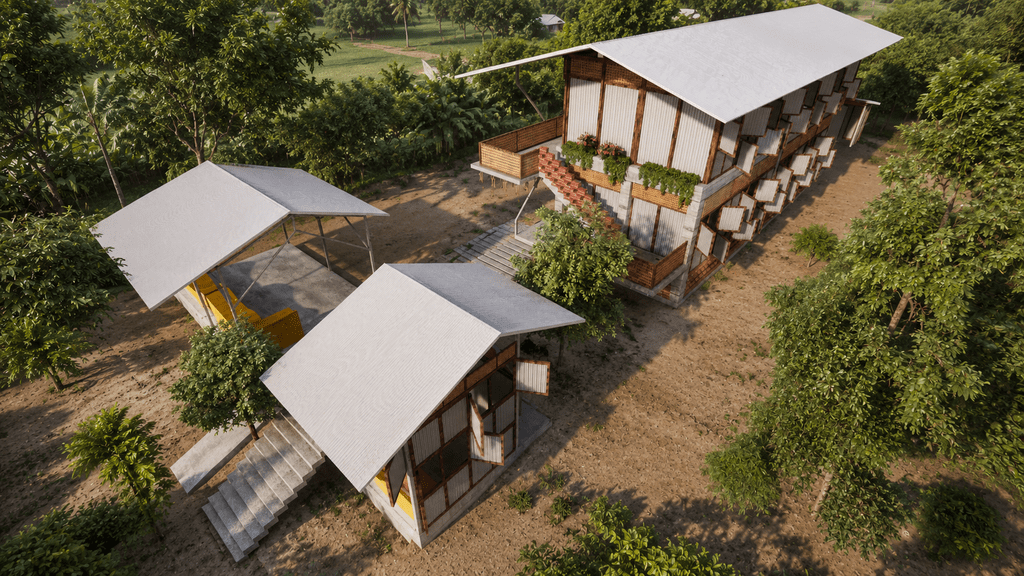
This need has now opened a new chapter through a partnership with the German Embassy Dhaka, which is supporting Amal Foundation’s Green and Inclusive School Infrastructure Initiative at the Riverine Char Land in Bogura under its Small-Scale Projects programme, funded by the German Federal Foreign Office. The project aims to strengthen Ucchash as a safer, more inclusive, and climate-responsive learning environment while creating greater continuity in children’s education. With this support, Ucchash will gradually expand beyond its two-year pre-primary model to provide education up to Grade 5, allowing children to continue their primary education within their own community. Four classrooms will be rebuilt, gender-segregated and child-friendly washrooms will be constructed, and Char Shonpocha will gain its first school-based library. The new two-storied school building will also be designed around the environmental realities of the char, using climate-resilient and locally relevant eco-friendly materials. Its design will support natural cooling during extreme summer heat without relying on air conditioning. One classroom will also serve as a multi-purpose classroom with a multimedia setup that can be used for after-school community development activities. Extending the value of the school beyond the classroom.
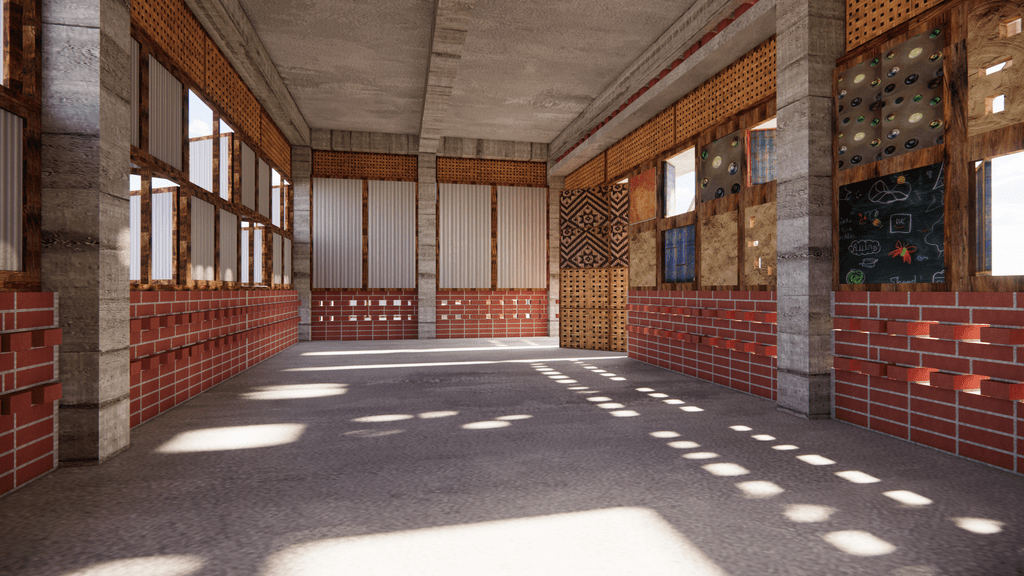
With the expansion, Ucchash is expected to accommodate around 70 students and approach its full attendance capacity by 2027. But the significance of this initiative is not only in the additional classrooms, facilities, or student numbers. It is about creating the conditions for children in a remote and climate-vulnerable community to learn safely, remain engaged in education, and continue their primary schooling closer to home. What began in 2017 as an effort to provide children with a stronger educational foundation has grown into a broader commitment to building a more inclusive and climate-resilient pathway to learning. The support of the German Embassy Dhaka builds on the foundation created by Ucchash and responds to the needs that have emerged through its own success. The river will continue to shape life on Char Shonpocha, but education can help children shape what comes next. For Ucchash, the journey is no longer only about helping children take their first steps into learning. It is about creating a school where they can continue that journey with safety, dignity and greater opportunity.