
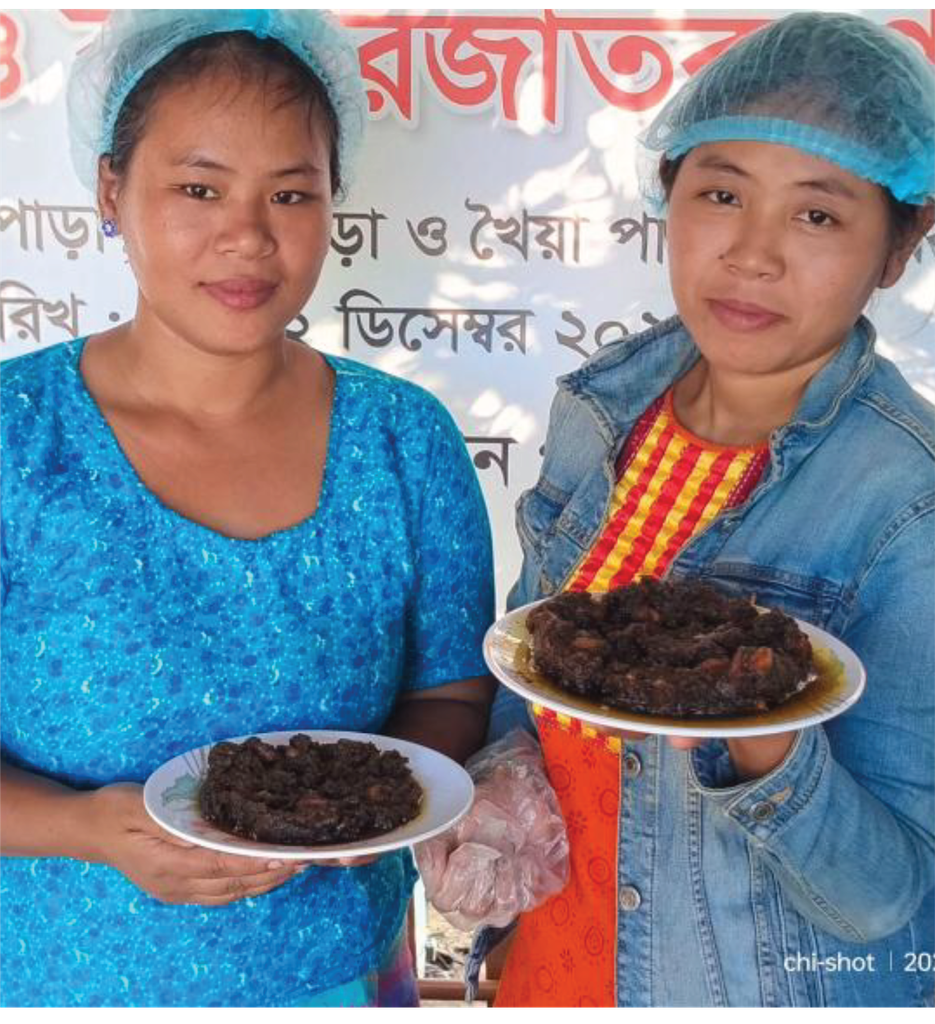
The Chittagong Hill Tracts remain cut off from the national market in ways that hyper-connectivity hasn’t fixed. Farmers there grow more than they can sell, and that surplus rots instead of turning into income. Amal Foundation, working with the UNDP LoGIC project, decided to close that gap using a skill it already had: pickle production.
Over four days in December 2025, Amal Foundation trained LoGIC beneficiaries across four locations in Bandarban and Rangamati: Ruma, Lama, Kuhalong, and Rangamati Sadar. Each five-hour session split into two parts. The first covered hands-on production of Tamarind and Olive pickle. The second covered the technical side: hygiene during production, preserving without chemicals, packing for market, and how to sell locally or partner with Amal Foundation for distribution. Participants worked in groups of five around individual stoves, with the trainer moving station to station repeating instructions, while the technical segment was delivered to everyone together. Sessions closed with participants mapping out next steps alongside the UNDP LoGIC team.
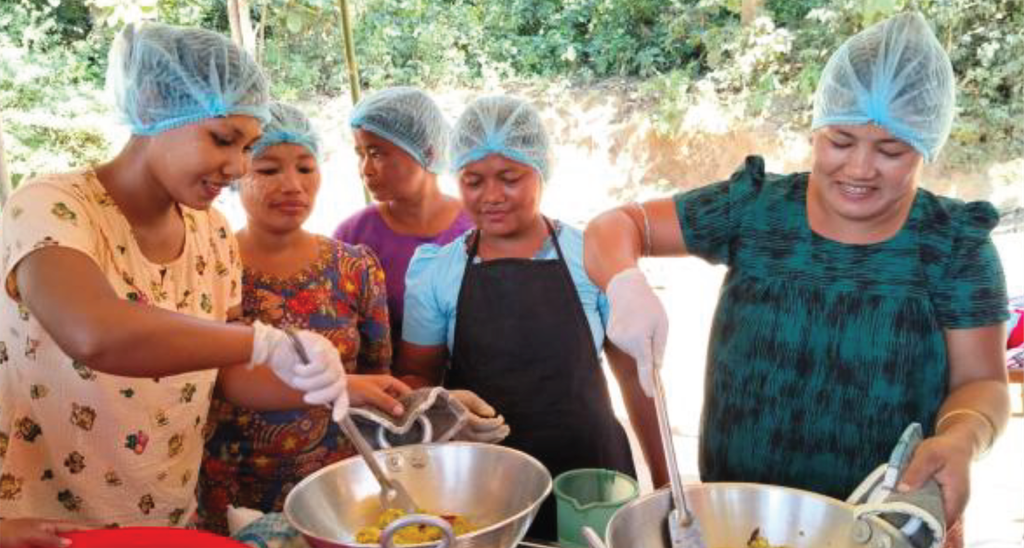
Demand outran the plan. Amal had budgeted for 25 participants per site. Ruma and Lama each drew five more, and Kuhalong drew 14 more. In total, 124 people were trained: 30 in Ruma on December 10, 30 in Lama on December 11, 39 in Kuhalong on December 12, and 25 in Rangamati Sadar on December 14, the last group pulled from four upazilas — Kuhalong, Jurachari, Belaichari, and Barkal.
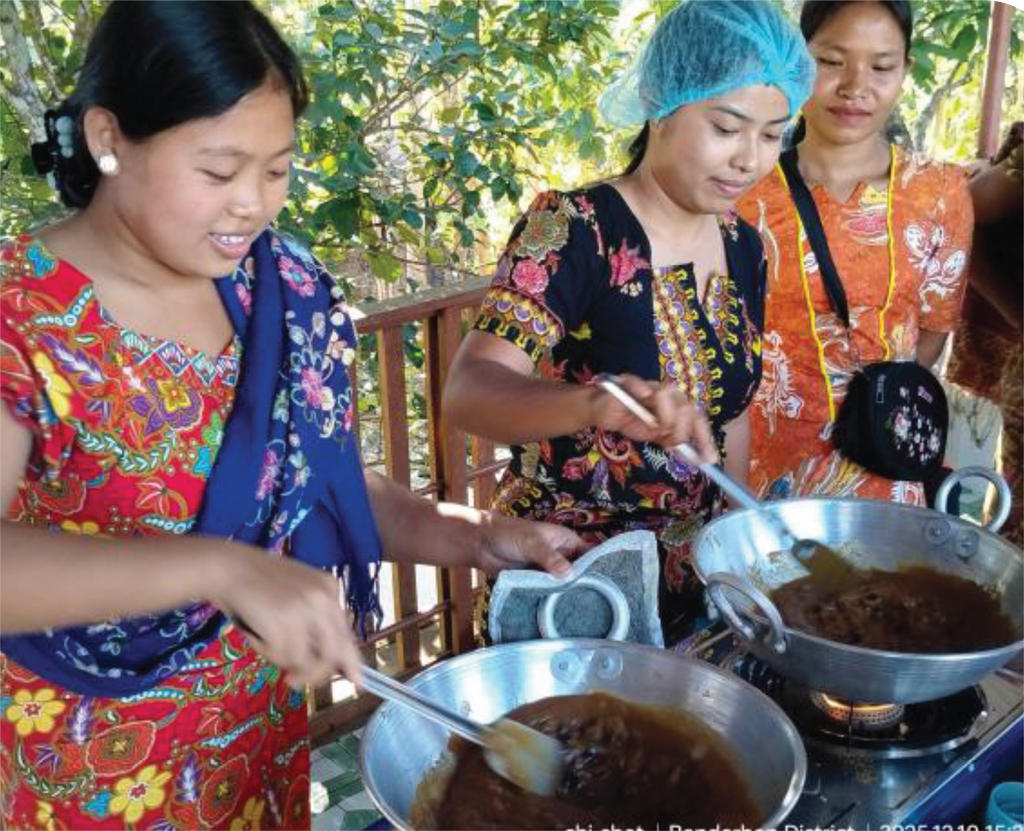
Some participants moved fast. Rupali Chakma of Jurachari Upazila, who runs a small tea and snack shop, was already selling pickles made with the new method before the report was written; her earlier attempts, she said, hadn’t been up to standard. Another Rangamati participant sent a batch to UNDP’s LoGIC office in Dhaka, and a third began small-scale production reported through Rangamati’s DCC.
In Bandarban, Mari Tripura, president of the Jaba LoGIC Women’s Group in Ruma, made a 250-gram trial batch for her group to taste-test; she’d made pickles before, but said the training sharpened her technique. Mamaching Marma, a mother of two in Lama who used to make pickles only for home use, said the quality gap was noticeable. Ruma Akter in Kuhalong made a small batch and said the taste improved sharply.
Across sites, the pickles participants made during training barely survived the day. Neighbors kept stopping by to try it, curious about a food that was new to many of the trainees themselves. Groups kept only two 250-gram jars for UNDP LoGIC to sample and ate the rest. In Ruma, some took home the leftover raw materials to repeat the recipe on their own.
Amal Foundation’s next step is to extend the training to more LoGIC beneficiaries, with an emphasis on maintaining production standards and building market linkages, both within CHT and toward the tourist market beyond it.